


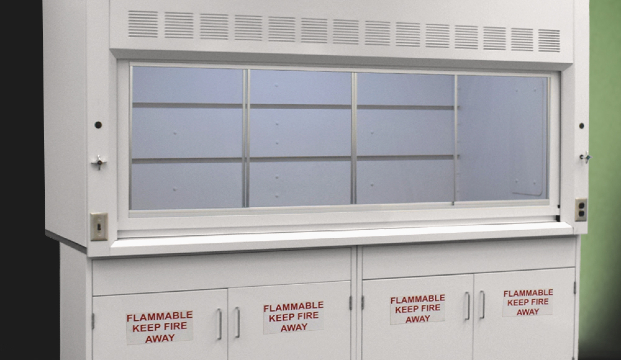
A properly specified, installed, and maintained fume hood is one of the most effective primary containment devices available to laboratory personnel, but its performance depends on far more than just turning on the blower. Understanding what drives fume hood effectiveness helps lab managers make better purchasing, placement, and maintenance decisions.
What makes a fume hood effective?
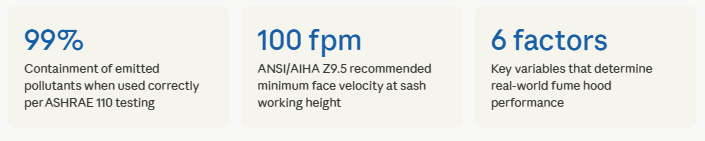
A fume hood works by drawing air inward across the sash opening, capturing chemical vapors, particulates, and aerosols before exhausting them away from the user. When every element of the system is properly specified and operated, the ASHRAE 110 test protocol confirms containment rates of 99% or better. When any element fails, that performance drops sharply. Here are the six variables that matter most.
1. Design and Construction
The internal geometry of a fume hood, including baffle placement, airfoil design at the sill, and sash configuration, governs how uniformly air flows across the work zone. A well-engineered hood maintains consistent airflow across the full face opening, eliminating low-velocity dead zones where vapors can escape. Fisher American hoods are UL-listed and designed to comply with SEFA 1 standards, ensuring the structural and aerodynamic integrity required for reliable containment.
2. Airflow and Face Velocity
The speed of air entering the hood at the sash opening (aka face velocity) is the single most measurable indicator of containment performance. ANSI/AIHA Z9.5 recommends a minimum of 100 feet per minute (fpm) at the sash working height. However, more is not always better: face velocities above 150 fpm can create turbulence that actually pulls contaminants out of the hood. Annual face velocity testing by a certified industrial hygienist is the industry standard.
3. Location and Installation
Even a perfectly designed hood will fail if installed in a disruptive airflow environment. Fume hoods should be positioned away from high-traffic walkways, HVAC supply diffusers, doors, and exterior windows. Cross-drafts as low as 20–30 fpm can overwhelm the face velocity and breach containment. A pre-installation airflow survey of the laboratory space is strongly recommended before specifying hood placement
4. Maintenance and Testing
OSHA and ANSI/AIHA Z9.5 both require periodic inspection and testing of laboratory fume hoods. A maintenance program should include annual face velocity verification, filter inspection (for ductless units), sash mechanism checks, and baffle cleaning. Alarm systems that alert users to low airflow conditions provide a critical safety backstop between scheduled inspections. Neglecting maintenance is the leading cause of fume hood performance failures in working laboratories.
5. User Practices
Laboratory personnel directly influence containment effectiveness through daily operating habits. Best practices include:
- keeping the sash at or below the marked working height
- maintaining at least six inches of clearance between equipment and the sash face
- avoiding rapid arm movements through the sash opening that can disrupt airflow
- never storing chemicals or equipment inside the hood when it is not actively in use
User training should be part of every lab’s onboarding program.
6. Type of Contaminants
Standard ducted fume hoods are designed for a broad range of chemical vapors and aerosols. However, some applications require specialized solutions: high-toxicity compounds (carcinogens, reproductive hazards) may require hoods with enhanced containment ratings; radiological work requires hoods with HEPA and/or charcoal filtration; and perchloric acid applications require dedicated wash-down hoods with non-reactive interior surfaces. Matching the hood specification to the chemical hazard profile is a non-negotiable safety requirement.
A fume hood that meets ASHRAE 110 performance criteria and is operated correctly by trained personnel provides robust, reliable protection for laboratory workers. The equipment itself is only one part of a complete safety system — placement, maintenance, and user behavior complete the picture.
Fisher American has manufactured UL-listed fume hoods from our Rockton, Illinois facility for decades. Our team can assist with hood selection, specification review, and replacement of underperforming equipment.
Recommended products
-
10′ Fisher American Fume Hood w/ ACID & General Storage Cabinets
$19,925.00 -
10′ x 48″ Fisher American Fume Hood w/ Blue General & Flammable Storage Cabinets
$25,925.00 -
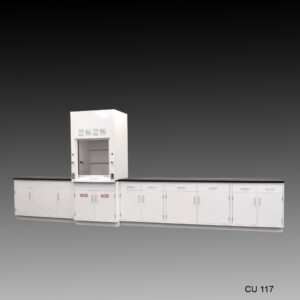
3′ Fisher American Fume Hood w/ ACID Storage & 15′ Laboratory Cabinet Group (CU-117)
$15,125.00 -
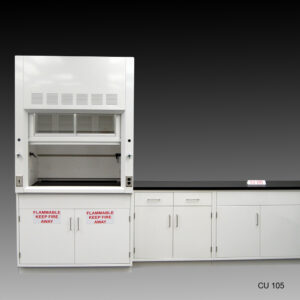
4′ Fisher American Fume Hood w/ Flammable Storage & 10′ Laboratory Cabinet Group (CU-105)
$13,950.00