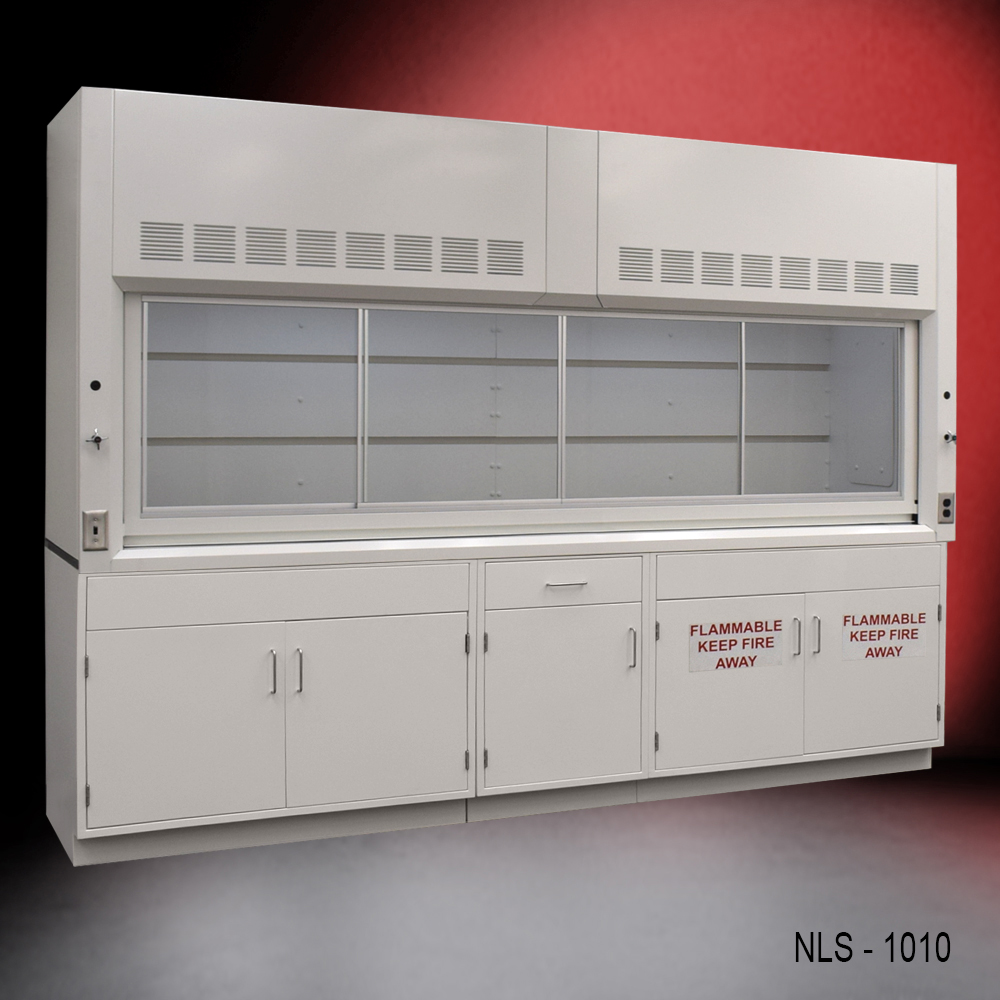



A fume hood is a ventilated enclosure designed to capture, contain, and exhaust hazardous fumes, vapors, and particulates away from laboratory personnel. Think of it as a protective barrier that creates a controlled environment where dangerous chemical reactions can occur safely.
It keeps lab personnel safe by capturing airborne pollutants and directing them away from the user.
If your laboratory works with volatile chemicals, it is imperative that such tasks take place inside a fume hood. Working within a fume hood will secure the contaminated air and move it completely away from the laboratory. The fume hood will then force the contaminated air through the exhaust system of the building and release it outside and away from laboratory personnel.
Anatomy of a Fume Hood: Components That Keep You Safe
Understanding how your fume hood works helps you use it correctly and recognize when something’s wrong. Here are the critical components:
The Sash: Your Primary Barrier
The sash is the movable window at the front of the hood. It’s not just for visibility; it’s a critical safety barrier that controls airflow and protects you from splashes, reactions, and exposure. For the fume hood to work efficiently, it is important to follow the sash guidelines. When not in use, the sash should be closed. A fume hood is not meant for storage, so remember to remove all chemicals before closing the sash.
Work Surface: Where Science Happens Safely
This is your functional workspace, designed to be chemically resistant and easy to decontaminate. The surface sits above the airfoil, which directs contaminated air into the exhaust system. This could be a bench top or alternatively, the floor of a walk-in fume hood.
Baffles: The Airflow Engineers
Baffles are the vertical panels at the back of the hood with adjustable slots. They’re precisely engineered to create even airflow distribution across the work surface, preventing turbulence and ensuring consistent capture. When adjusted properly, baffles will eliminate any dead spots and optimize the efficiency of the fume hood in capturing the contaminated air.
Related: Understanding the Importance of Fume Hood Baffles
The Face: Measuring Protection
The face is the hood opening where air enters. Face velocity—measured in feet per minute (fpm)—determines capture efficiency. ANSI Z9.5 standards typically require 80-120 fpm, though your application may require specific velocities.
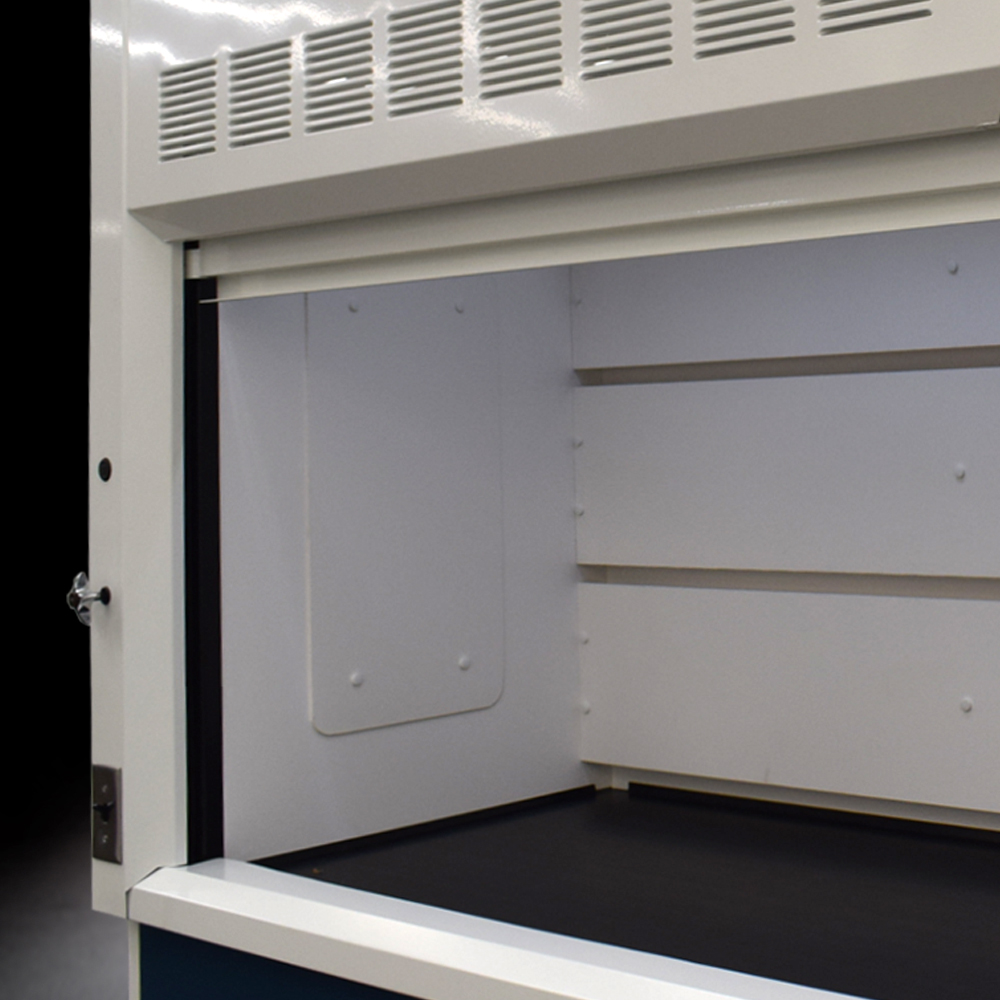
The Airfoil: Smooth Operator
The airfoil is located along the bottom and side edges of the fume hood. Airfoils help to simplify the airflow and prevent whirls of air known as eddies from carrying contaminants out of the hood and into the work area. There is also an open space below the bottom airfoil that works as a place for the hood to exhaust when the sash is completely closed.
The Exhaust Plenum: Final Checkpoint
The exhaust plenum equalizes airflow before it exits through the ductwork. This component ensures consistent exhaust performance and houses monitoring equipment like flow sensors and dampers that adjust to maintain proper velocity.
Types of Fume Hoods: Matching Equipment to Application
Whether you are working with chemicals as a hobby or within a laboratory environment, you must invest in a ventilation system to keep toxic fumes out of the work area. The first step is to determine what type of fume hood you should invest in.
Ducted Fume Hoods: The Gold Standard
Ducted fume hoods exhaust contaminated air directly outside the building through dedicated ductwork. They provide the highest level of protection and handle the broadest range of chemicals.
Best for: High-volume chemical use, toxic or carcinogenic materials, production laboratories, and applications requiring maximum protection.
Benchtop Fume Hoods: Compact Solutions
Bench-top fume hoods are hoods that are placed on the top of a work surface. They are, on average, about three feet from the floor. This type of hood requires ductwork, a base cabinet, a work surface, and an exhaust blower for it to function properly.
Best for: Space-constrained laboratories, specialized applications like powder weighing, supplementary protection for specific processes, and educational settings.
Walk-In Fume Hoods: Large-Scale Protection
Also known as a floor-mounted fume hood, a walk-in fume hood does not sit on another surface. This type of fume hood is similar in size to a small closet and comes in a wide variety of measurements to best fit your needs.
Best for: Large apparatus setup, pilot plant operations, industrial R&D, and processes requiring extended time working with hazardous materials.
Portable Fume Hoods
Also known as recirculating range hoods, portable fume hoods operate on a carbon filter system. These fume hoods are smaller in size and often feature wheels for easy movement. Portable hoods are ductless, so ductwork is not required. They also use less energy than full-sized fume hoods.
Best for: Teaching laboratories, mobile applications, facilities without ductwork capacity, and work with small volumes of low-toxicity solvents that can be effectively filtered.
Choosing the Right Fume Hood
The primary function of a fume hood is to protect laboratory personnel. Choosing the right type of fume hood will depend on many factors, including how big your project is, the type of project, what chemicals will be used, and your budget.
Whether you’re setting up your first lab or upgrading a facility with decades of history, the decisions you make about ventilation equipment will impact your team’s safety and your operation’s efficiency for years to come.
Call us at (800) 433-1900 or schedule a consultation. Our team will assess your requirements and provide detailed recommendations—no obligation, no sales pressure.