

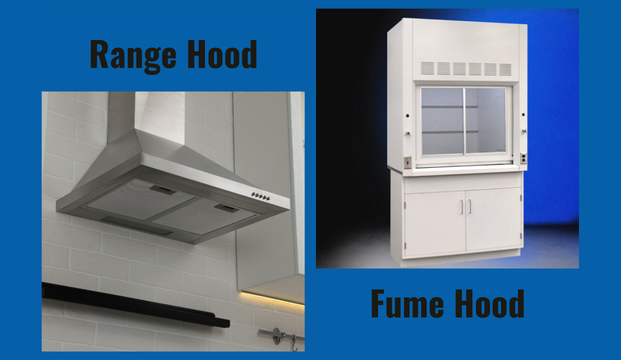
Range Hood vs Fume Hood: Why the Difference Matters
At a glance, a range hood and a fume hood can look similar. Both capture airborne contaminants and move them away from people. That’s where the similarity ends.
Understanding the difference matters—especially in environments where chemicals, vapors, or hazardous materials are present. Using the wrong system isn’t just inefficient. It can put people at risk.
What is a Range Hood Used For?
A range hood is a ventilation device installed above a kitchen cooktop. Its purpose is to remove byproducts created during cooking and improve indoor air quality in residential or light commercial spaces.
When operating, a range hood helps remove:
- Grease
- Smoke
- Cooking fumes
- Odors
- Steam
- Heat
Range hoods are designed for comfort and cleanliness, not for chemical containment or personal protection.
Ducted vs Ductless Range Hoods Explained
Range hoods generally fall into two categories:
Ducted Kitchen Range Hoods
Ducted range hoods pull air through a filter and exhaust it outside the building. Fresh air is then circulated back into the space, making this option more effective at removing cooking byproducts.
Ductless (Recirculating) Range Hoods
Ductless range hoods filter air and return it back into the room instead of venting outdoors. Because no fresh air is introduced, additional ventilation is often recommended.
The right option depends on kitchen layout, budget, and installation constraints.
What is a Fume Hood in a Laboratory?
A fume hood is a specialized laboratory safety device designed to protect personnel from hazardous airborne substances.
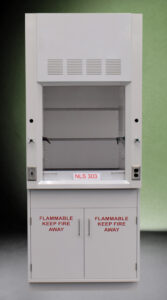
Unlike a range hood, a fume hood is engineered to capture, contain, and remove:
- Toxic fumes
- Chemical vapors
- Hazardous gases
- Fine particulates
By drawing contaminated air away from the user and exhausting it safely, a fume hood acts as a primary line of defense in laboratory environments.
How Laboratory Fume Hoods Manage Airflow
Laboratory fume hoods are built with precise airflow control to maintain containment and safety.
Ducted Laboratory Fume Hoods
Ducted fume hoods continuously remove contaminated air and exhaust it completely outside the building. Clean air is then supplied back into the laboratory.
Ductless Fume Hoods
Ductless fume hoods use advanced filtration systems tailored to specific chemicals. After passing through multiple filters, clean air is released back into the lab. But there are some challenges to be cognizant of.
Both systems are engineered to meet strict laboratory safety requirements.
Key Differences Between a Range Hood and a Fume Hood
Purpose and Safety Function
- Range hood: Improves comfort and air quality during cooking
- Fume hood: Protects users from hazardous substances
Intended Environment
- Range hood: Residential kitchens and food preparation areas
- Fume hood: Laboratories, research facilities, and industrial spaces
Risk and Containment Capabilities
- Range hood: Not designed for chemical containment
- Fume hood: Designed specifically for exposure control and safety
While some kitchen hoods include fire-related features, they are not safety devices for hazardous materials.
| 🍳 Range Hood | 🧪 Fume Hood | |
|---|---|---|
| Primary Role | Improves comfort and air quality | Protects people from hazardous exposure |
| Where It’s Used | Kitchens and food prep areas | Laboratories and controlled workspaces |
| Designed For Safety? | ❌ No | ✅ Yes |
| What It Removes | Smoke, grease, odors, heat | Toxic fumes, vapors, gases, particulates |
| Containment Capability | Low | High |
| Airflow Control | General ventilation | Precision-engineered airflow |
| Exhaust Method | Ducted outside or recirculated | Ducted outside or chemically filtered |
| Filtration Type | Grease or charcoal filters | Task-specific chemical filters |
| User Protection Level | Comfort-focused | Safety-critical |
| Appropriate for Lab Use? | ❌ Never | ✅ Required |
When a Fume Hood Is Required Instead of a Range Hood
If an application involves chemicals, solvents, or hazardous materials, a kitchen-style range hood is not appropriate. Using the wrong ventilation system can create exposure risks and compliance issues.
A properly selected fume hood supports:
- Worker safety
- Laboratory efficiency
- Controlled airflow
- Long-term operational reliability
Talk to a Fume Hood Expert
If you need help selecting the right fume hood or laboratory cabinet, Fisher American can assist. We offer a wide range of laboratory furniture, fume hoods, and workstations designed for real-world lab environments, with many products shipping quickly.
Contact us to discuss your lab requirements and safety goals.