


Every year, thousands of laboratory workers are exposed to hazardous chemicals that could have been contained by a single piece of equipment: a fume hood. Yet one of the most common safety gaps in lab environments isn’t a lack of fume hoods, it’s not knowing when one is required. Acetone left open on a benchtop. Hydrochloric acid mixed without ventilation. Formaldehyde handled as if it were routine. These aren’t edge cases; they’re everyday decisions that carry real consequences. Understanding which chemicals require a fume hood — and why — is one of the most foundational competencies in laboratory safety, and it starts here.
The Purpose of a Fume Hood
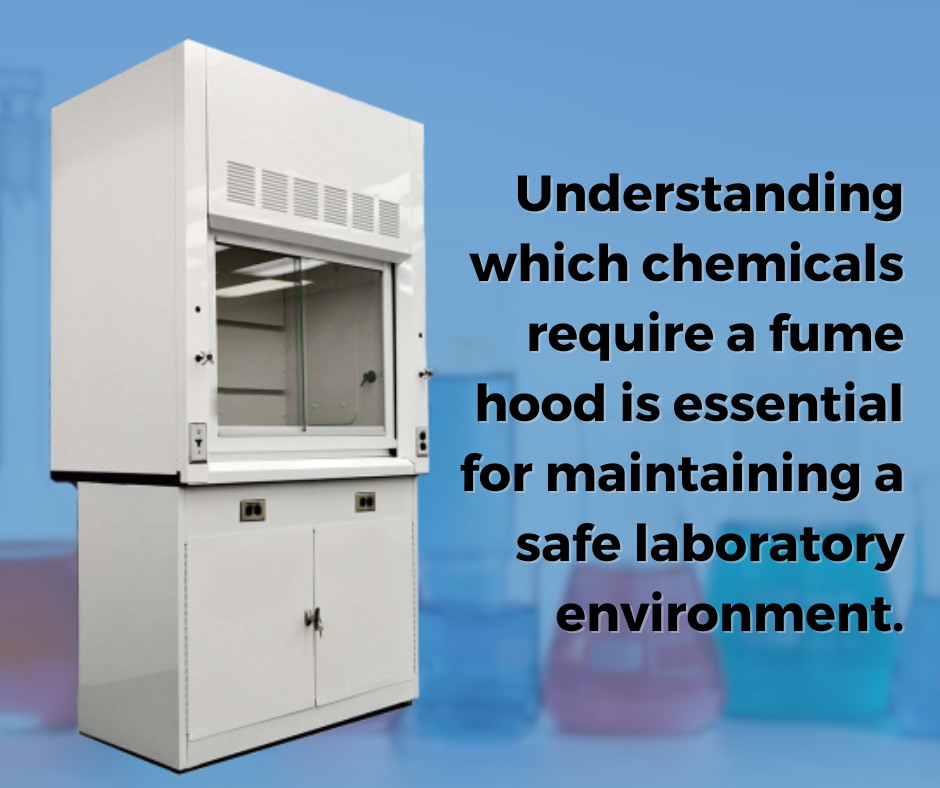
A fume hood is a ventilated enclosure that provides a controlled workspace, limiting exposure to harmful chemicals and fumes. It operates by drawing air in from the laboratory and expelling it outside or filtering it before recirculation. The primary purpose of a fume hood is to protect laboratory personnel from toxic, volatile, or odorous substances that may be released during experiments.
Chemicals Requiring a Fume Hood
Volatile Organic Compounds (VOCs)
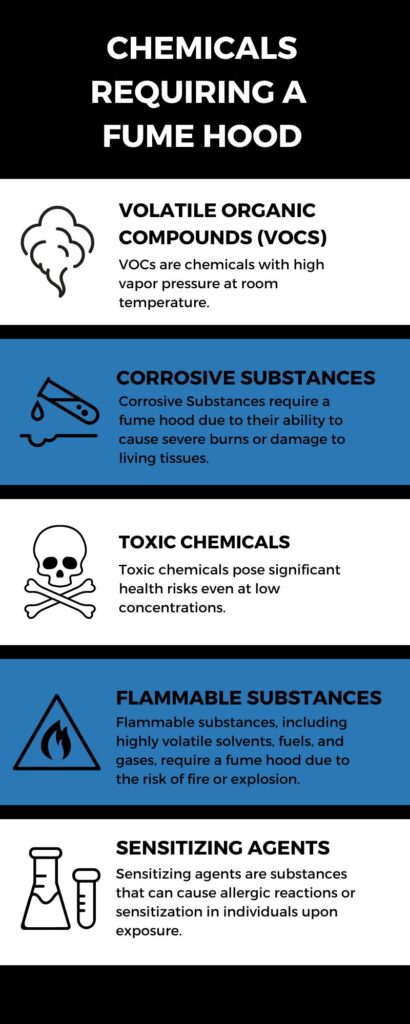
Volatile organic compounds, or VOCs, are chemicals with high vapor pressure at room temperature. They can easily evaporate into the air and pose health risks when inhaled. Common VOCs include solvents like acetone, ethanol, benzene, and toluene. When handling these substances, it is essential to use a fume hood to prevent inhalation and potential long-term health effects.
Corrosive Substances
Corrosive substances, such as strong acids (e.g., hydrochloric acid, sulfuric acid) and bases (e.g., sodium hydroxide, potassium hydroxide), require a fume hood due to their ability to cause severe burns or damage to living tissues. Fume hoods protect against accidental splashes or releases that can occur during the handling or mixing of corrosive materials.
Toxic Chemicals
Toxic chemicals, such as certain pesticides, heavy metals, and carcinogens, pose significant health risks even at low concentrations. Examples include lead compounds, mercury, arsenic compounds, and formaldehyde. Working with these substances in a fume hood prevents inhalation, skin contact, and contamination of the laboratory environment.
Flammable Substances
Flammable substances, including highly volatile solvents, fuels, and gases, require a fume hood due to the risk of fire or explosion. These substances have low flashpoints and can ignite easily in the presence of an open flame, spark, or heat source. A fume hood provides ventilation and minimizes the buildup of flammable vapors, reducing the potential for accidents.
Sensitizing Agents
Sensitizing agents are substances that can cause allergic reactions or sensitization in individuals upon exposure. Examples include certain dyes, isocyanates, and some pharmaceutical ingredients. A fume hood is necessary when handling these chemicals to prevent inhalation or skin contact, reducing the likelihood of sensitization or allergic responses.
Related: Can You Store Chemicals in a Fume Hood?
Factors to Consider
Quantity and Concentration
The quantity and concentration of the chemical being used are essential considerations in determining whether a fume hood is required. Even substances typically considered safe may necessitate the use of a fume hood if used in large quantities or at high concentrations. It is crucial to consult safety data sheets (SDS) and relevant regulations to determine the appropriate precautions.
Manipulation and Reaction Conditions
The manner in which a chemical is manipulated or the reaction conditions employed can influence whether a fume hood is necessary. For instance, if a chemical undergoes reactions that generate noxious fumes, volatile by-products, or heat, it is prudent to work within a fume hood to control and remove these hazardous components from the workspace.
Potential Hazards and Risks
Consider the potential hazards and risks associated with the chemical being used. Evaluate its toxicity, flammability, corrosiveness, and volatility. If the chemical poses a significant risk to human health or the environment, it is crucial to use a fume hood for added protection.
Regulatory and Institutional Guidelines
Adhere to regulatory requirements and institutional guidelines when determining the need for a fume hood. Different organizations and jurisdictions may have specific regulations and standards in place regarding the use of fume hoods for certain chemicals. Familiarize yourself with these guidelines to ensure compliance and safety.
Benefits of Using a Fume Hood
Personal Protection
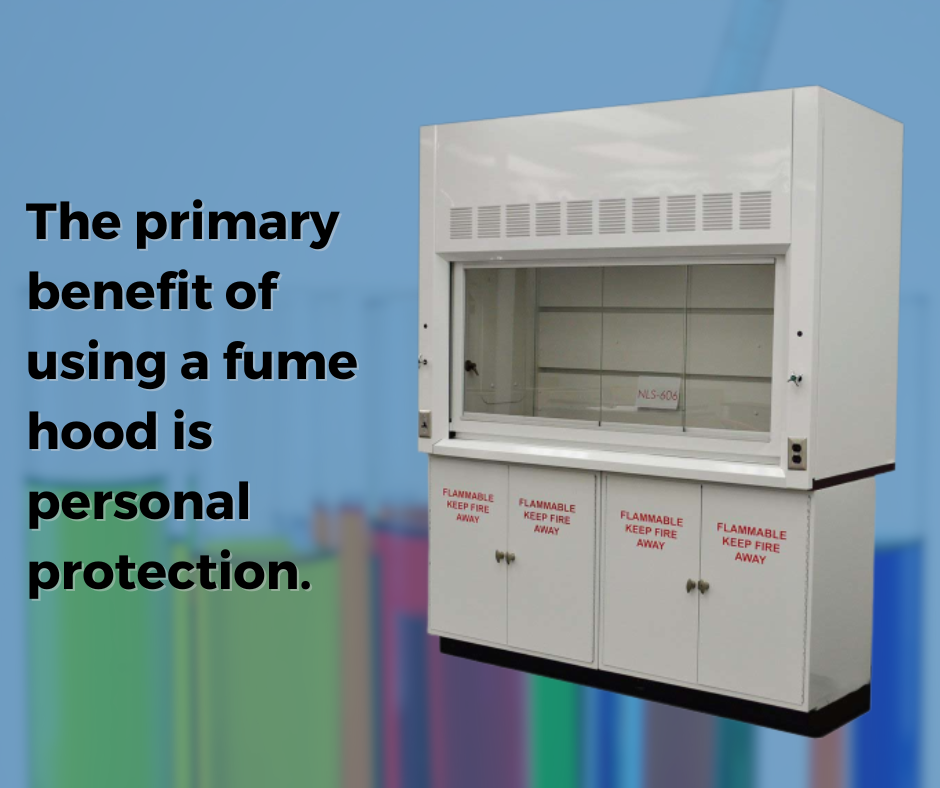
The primary benefit of using a fume hood is personal protection. It creates a physical barrier between the researcher and the hazardous chemical, preventing direct exposure to fumes, vapors, and potential splashes. Properly using a fume hood ensures that any released substances are effectively contained and expelled away from the user.
Environmental Protection
A fume hood not only protects individuals but also safeguards the laboratory environment. It prevents the release of toxic chemicals into the air, minimizing the risk of contamination and potential harm to other laboratory personnel, adjacent workstations, or surrounding areas. The ventilation system of a fume hood effectively captures and filters or exhausts harmful substances, maintaining a clean and safe working environment.
Regulatory Compliance
Using a fume hood when required ensures compliance with safety regulations and guidelines. Regulatory bodies and institutions have specific requirements regarding the handling and use of hazardous chemicals. By utilizing a fume hood appropriately, laboratory personnel demonstrate their commitment to safety and compliance, reducing the risk of penalties, fines, or legal consequences.
Risk Mitigation
The use of a fume hood significantly mitigates the risk of accidents, injuries, and exposure to hazardous chemicals. It provides an additional layer of protection by minimizing the potential for inhalation, skin contact, or ingestion of harmful substances. Employing a fume hood is a proactive measure that reduces the likelihood of adverse health effects and ensures the well-being of laboratory personnel.
Related: Indoor Air Quality and the Significance of Fume Hoods
Choosing the Right Fume Hood Starts with Knowing Your Chemicals
Knowing which chemicals require a fume hood is only half the equation. The other half is making sure the hood you’re using is the right one for the job. Not all fume hoods offer the same protection — ducted hoods, ductless hoods, and specialty enclosures each serve different chemical profiles and laboratory configurations. A hood that performs well with VOC solvents may not be appropriate for high-concentration corrosives or radiological materials.
Fisher American has been helping laboratories across the country source, specify, and find fume hoods that meet their exact safety and compliance requirements. Whether you’re equipping a new facility or replacing aging equipment, our team can help you match the right hood to the chemicals you work with.
Explore our fume hood selection or contact us to speak with a specialist. Most orders ship in under two weeks.
Frequently Asked Questions About Fume Hood Chemical Requirements
Household-concentration bleach (sodium hypochlorite) used in small quantities typically doesn’t require a fume hood. However, concentrated bleach, bleach used in large volumes, or bleach mixed with other chemicals — particularly acids or ammonia — can release chlorine gas and must be handled inside a fume hood. Always consult the chemical’s Safety Data Sheet (SDS) before proceeding without ventilation.
OSHA sets the permissible exposure limit (PEL) for acetone at 1,000 ppm (8-hour TWA). A fume hood is recommended whenever acetone is used in open containers, heated, or used in volumes where evaporation could approach or exceed this threshold. In practice, most laboratory protocols recommend using a fume hood for any open acetone work as a precautionary standard.
No. Standard fume hoods are not appropriate for all hazardous materials. Perchloric acid requires a dedicated perchloric acid fume hood with a wash-down system. Biological hazards require a biosafety cabinet, not a chemical fume hood. Radiological materials require a radiological hood. Always match hood type to the specific hazard class of the chemicals being used.
A fume hood protects the user from chemical vapors and fumes by exhausting air away from the work area. A biosafety cabinet (BSC) protects the user, the sample, and the environment from biological hazards using HEPA filtration. Read More.